
Rhea County Bench Warrants Explained
A bench warrant is what a judge signs when a required appearance or other court direction goes unmet. In Rhea County these matters land in Criminal Court, General Sessions, Circuit, Family and Juvenile Court, or one of three municipal courts, and the division that issued the process decides how it gets cleared. The wording can trip people up. Tennessee failure-to-appear laws sometimes use the term capias instead. Rhea County publishes no local terminology chart, so read the notice you received and ask the clerk to identify the exact process. That matters for routing too. A Dayton, Spring City, or Graysville traffic citation belongs with that city's clerk, not an unrelated county counter.
Rhea County Missed-Date Warrant Timeline
Miss a date set by a summons, citation, or bond and the court may respond with a bench warrant or other process. The judge still has choices. A new setting, a bond, payment, or a motion to recall are all possible, and the outcome turns on the individual case. No countywide automatic rule or reset form exists in Rhea County, so nothing happens until the court acts. One state law deserves mention. Public Chapter 352, effective July 1, 2025, sets transmission rules for certain qualifying failure-to-appear matters, but it does not open any law-enforcement database to the public. For what actually happened, ask the clerk about the specific case.
How Rhea County Bench Warrants Are Issued
Whatever court required the appearance holds the power to issue, recall, or reset its own warrant. General Sessions handles designated misdemeanors and preliminary matters, while Criminal Court is the felony trial court the Sheriff identifies as a local source of arrest warrants. Municipal courts take city ordinance and traffic cases, and juvenile or family files have tighter public access. For contacts, the AOC clerk profile for Jamie Holloway lists the Rhea County clerk's state directory entry. One caution applies. The county's own court page and the AOC listing show different numbers for Circuit and Sessions contact in some contexts, so call ahead and confirm the right division before you drive over.
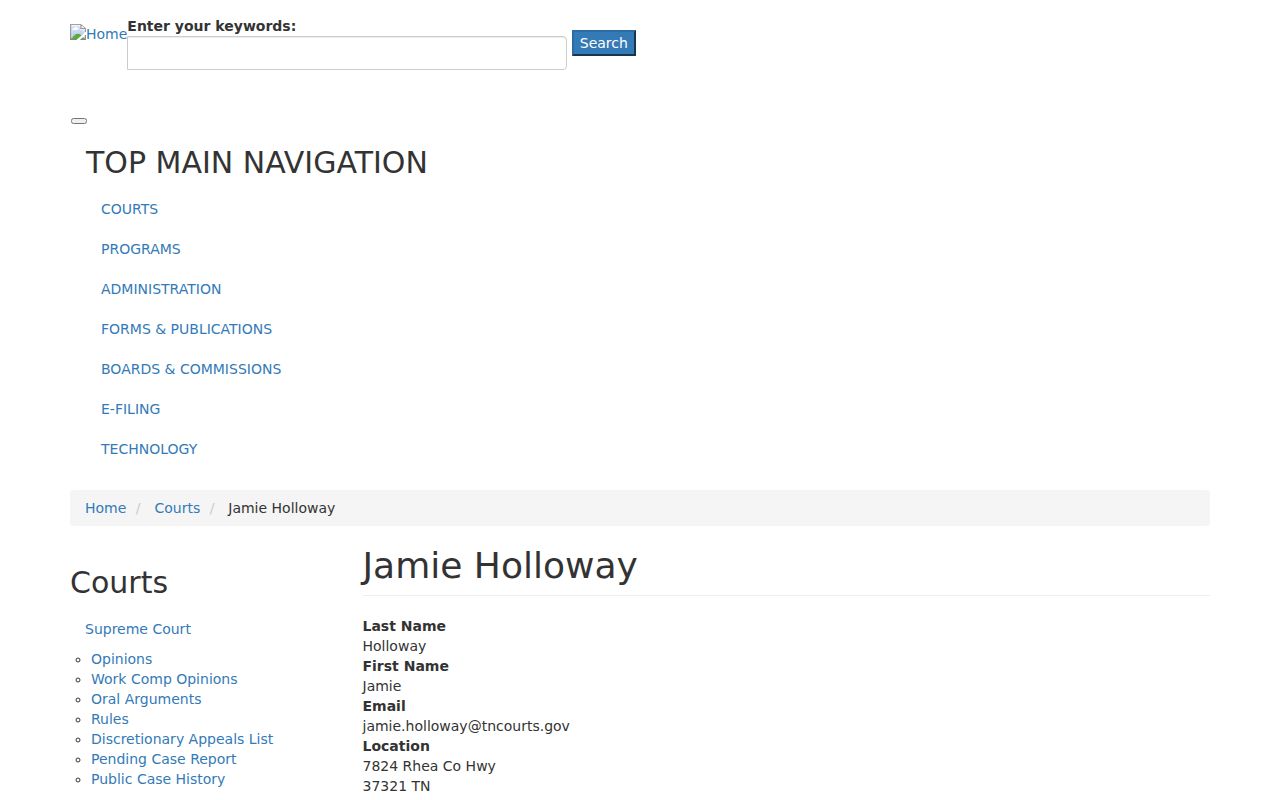
A directory helps you find the Rhea County clerk. Only the court itself can confirm a warrant in a specific case.
Rhea County Court Warrant Routes Differ
There is no single record desk in Rhea County. A missed General Sessions date belongs with the Circuit and Sessions clerk, a felony trial matter belongs with Criminal Court, and a Dayton, Spring City, or Graysville citation starts with that city's court. Before discussing any payment or appearance, check which cause number and division appear in the case record.
| Process | Typical trigger | Who sets the remedy |
|---|---|---|
| Bench warrant | Missed court or failure to comply | The issuing judge or court |
| Arrest warrant | Probable cause for an offense | Judicial officer on sworn facts |
| City-court process | Missed municipal appearance or citation | The city court that set the date |
Bench and arrest warrants in Rhea County can both end in arrest, but they rest on different legal footing and clear through different steps.
Bench Warrants and Arrest Warrants Compared
The two documents do different jobs. A bench warrant follows a court event, such as a missed setting, contempt, or noncompliance with an order, while an arrest warrant generally begins with sworn facts reviewed for probable cause. The label matters in practice. The court may demand different steps to bring the case back before a judge. A capias is a third wrinkle: it too can direct that a person be brought before the court. Local materials do not call every Rhea County bench warrant a capias, and capias pro fine is not a label the county confirms using. Ask the clerk to read the exact process type and its current status.
Dayton Payment Requires a Clerk Call
Dayton City Court runs its municipal docket at its own building, and its payment rules are particular to it. The official page takes credit and debit cards in person, and it states the online payment link opens only after the person calls for payment information. A transaction fee applies, though the court does not state its amount. Paying is not the same as clearing the warrant. Ask whether the judge requires an appearance or a new date, whether the court will issue written compliance, and when the clerk updates the warrant entry. Dayton City Court's payment instructions cover its municipal cases only.
Requesting Rhea Bench Warrant Record Details
Rhea County's public court pages post no sample bench-warrant record or code list. Ask the clerk for the court, case number, process type, issue date, the missed setting or other basis, bond term, current status, and any recall or service date. The clerk can also say which details are public and which are restricted.
| Process number | No Rhea public format was located. |
|---|---|
| Case cause | Links the warrant to its court case. |
| Issuing court | Names the judge or division that controls the remedy. |
| Status | May be active, served, recalled, quashed, or awaiting an update. |
Spring City Traffic Court Meets Monthly
Spring City traffic court generally meets on the third Wednesday at 9 a.m. at the Police Department, unless the town posts a change. The clerk sits at City Hall, 369 Front Street, and the published phone is 423-365-6441, option 1. The court page offers a schedule and contact route, not a public warrant search. So call before you go. Ask whether the missed date produced a bench warrant, whether an appearance or payment is required, and how the court records compliance in its Rhea County docket. Police front-office hours and clerk availability may not match.
Resolving a Rhea County Bench Warrant
Start with the clerk who issued the warrant. Call to confirm it is still active, and ask what a new appearance, a recall motion, payment, or bond would take, since Rhea County posts no walk-in surrender window, bond schedule, or local motion-to-recall form. A lawyer may arrange a walk-through. Ask where the court expects the person to report before that day comes.
Confirm first. Do not assume that a payment, phone message, or old receipt recalled a bench warrant. Obtain the court’s written direction and ask when the Sheriff or entering agency will receive the update.
A recall or a release does not end the case. Ask the Rhea County clerk for the next court date and any conditions the court still requires of you.
Rhea County Juvenile Warrant Records Stay Restricted
Juvenile and family matters run through a separate court route. No public juvenile warrant list exists for Rhea County, and Tennessee's juvenile confidentiality rule limits access further. A parent, attorney, or authorized participant should contact the Juvenile Court office for the correct procedure instead of hunting through a roster. General court-record access works differently. Tennessee Rule 34's court-record access page describes that access and its exceptions, while the juvenile rule stacks stricter limits on top. So skip the public searches for these cases.
A general access rule does not open sealed or juvenile records.
Finding the Court That Issued the Warrant
Check any notice for the case number and court name. Then call the clerk for that division. In Rhea County, Circuit and Sessions contacts sit at the Justice Center, while municipal matters belong to the city clerk. The Sheriff can answer service questions. Only the issuing court can recall, reset, or change a bench warrant. For the full sequence, see the Rhea County warrant overview. Get a written order or receipt, and confirm that both the clerk and the entering agency updated the warrant's status.